

Sailing guide
Race courses, laylines, marks and gates
Learn how to follow a sailing course, approach a layline, round a mark and choose a gate end. Prepare the next leg before the turn.
By the SailPolars team · Updated
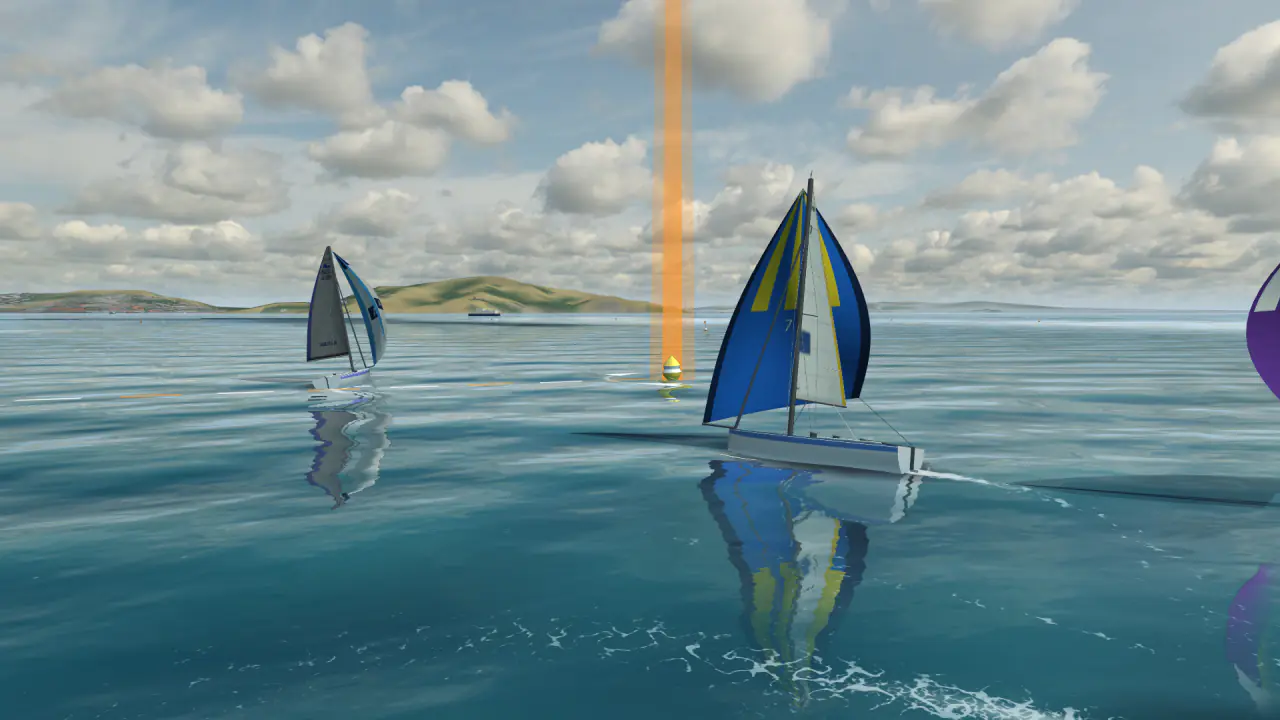
Read the whole course
A leg joins one course target to the next. A beat goes upwind. A run goes downwind. A reach goes across the wind.
Sail the targets in the required order. Leave each mark on its required side. Some courses finish on the starting line. Others use a separate finish. An earlier crossing is not necessarily the finish.
Approach on a useful track
A layline is the track that reaches a mark without another tack or gybe in the present conditions. Wind changes, leeway and current can move that track.
Arriving too soon can leave another turn near the mark. Sailing too far beyond the layline adds distance. Look ahead and keep enough room for traffic and the rounding.
Prepare the next leg
At a gate, pass between the two marks from the previous leg. Then round either end onto the next leg. Compare distance, traffic and the conditions beyond each end.
On the J/70, allow time to drop the spinnaker before an upwind turn. Take the helm before the mark. Best VMG does not make the rounding for you.
Practise this idea
- Open The track of a regatta.
- Identify the start, first mark, gate and finish.
- Plan the final tack before the windward mark.
- Choose a gate end and prepare the sail change.
- Steer around the mark and settle on the new leg.
Avoid this mistake
Do not steer directly at a gate mark and omit the crossing between the marks. Follow the required course route.
Check your understanding
Can you describe the next leg before each rounding? Complete a new course shape without missing a target.
Continue learning
This guide follows the SailPolars sailing school and guided practice lessons. Game controls describe the simulator. They do not replace practical instruction on a real boat.
Next: Sailing racing rules: keep clear and give roomAll practice lessons