
Sailing guide
Wind shifts: lifts, headers and tack cost
Learn to recognise a lift and a header. Decide when a lasting wind shift can repay the speed and distance lost during a tack.
By the SailPolars team · Updated
Compare against a reference
A wind shift changes the direction the wind comes from. Compare the new wind with a steady reference, such as the race's mean wind. Do not use a moving camera as that reference.
Upwind, a lift lets you hold a heading closer to your upwind target while maintaining a useful wind angle. A header makes the useful heading point farther away. The same shift can lift one tack and head the other.
Wait for useful evidence
A brief change can reverse before a tack recovers its cost. Observe whether the header lasts. Also check the distance remaining and the position of nearby boats.
For example, a small lasting gain over a long leg can repay a turn. The same gain close to the mark may not. There is no single shift size that makes every tack correct.
Separate beats from runs
Upwind, a lasting header can favour a tack. Downwind, a header can improve progress on the current gybe. Do not apply the upwind instruction without checking the leg.
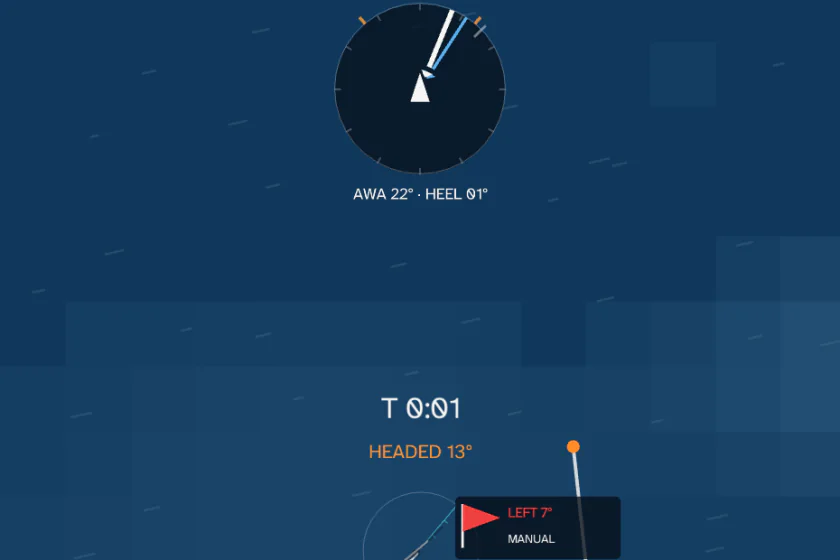
The compass shift bar shows a change against the mean wind. It is information about the wind. It is not a promise that one side of the course will win.
Practise this idea
- Open the wind-shift lesson.
- Hold a steady angle through the first short wind change.
- Observe the next change long enough to identify a lasting header.
- Check room and distance before you tack.
- Repeat the same weather and compare the result without that tack.
Avoid this mistake
Do not chase each compass movement with a turn. Each manoeuvre loses speed and needs time to recover.
Check your understanding
Can you identify which tack a shift lifts? Compare your progress after both boats have recovered from their turns.
Continue learning
This guide follows the SailPolars sailing school and guided practice lessons. Game controls describe the simulator. They do not replace practical instruction on a real boat.
Next: Wind pressure, gusts and lullsAll practice lessons