

Sailing guide
Points of sail and the no-go zone
Understand close-hauled sailing, beam reaches, broad reaches, runs and the no-go zone. Learn to choose an angle that keeps the sail working.
By the SailPolars team · Updated
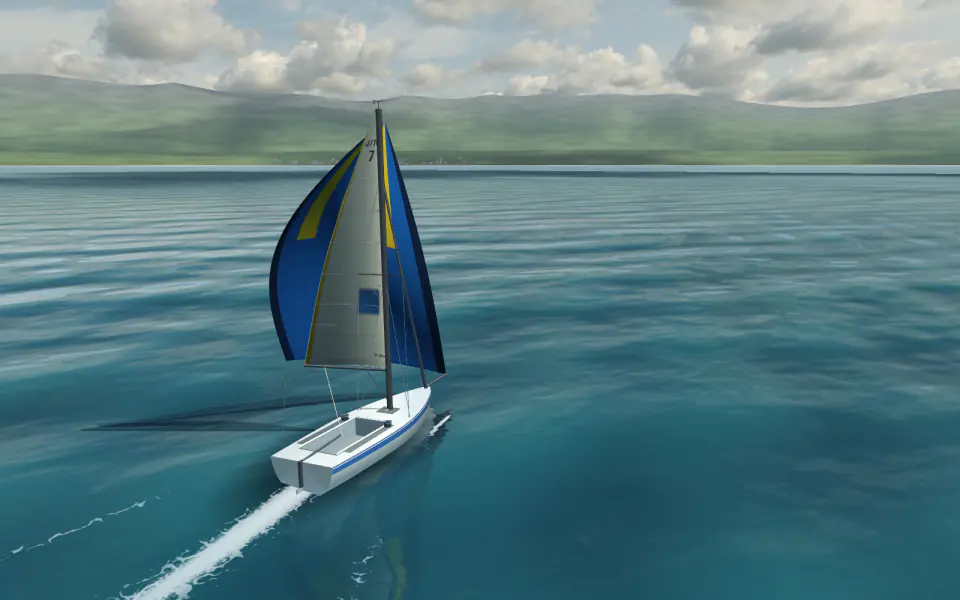
Measure the angle from the wind
A point of sail describes the boat's direction relative to the wind. True wind angle is the angle between the bow and the direction the true wind comes from.
Head to wind means the bow points into the wind. Directly downwind means the wind comes from behind. Use the wind direction, not the camera, as your reference.
Name the useful directions
Close-hauled means sailing at a useful angle toward the wind. A close reach is farther from the wind. A beam reach puts the true wind approximately 90 degrees from the bow.
A broad reach puts the wind farther behind the boat. A run is downwind sailing. The best angle depends on the boat, wind speed and waves. One fixed angle does not suit every boat.
Leave the no-go zone
The no-go zone is the range of angles too close to the wind for useful sailing. A sail in this zone loses its driving force. The boat slows and can drift sideways or backward.
To reach an upwind target, sail close-hauled on one tack. Then tack and sail close-hauled on the other. Do not point directly at an upwind mark and wait for speed.
Practise this idea
- Open the points-of-sail lesson.
- Find head to wind on the diagram.
- Turn to a beam reach and let the boat accelerate.
- Head up in small changes. Observe the loss of speed near the no-go zone.
- Bear away until the sail works again.
Avoid this mistake
A shorter-looking heading can produce slower progress. If the boat stalls, bear away before you make more upwind corrections.
Check your understanding
Can you identify a beam reach and a broad reach from the wind direction alone? Try again with the wind coming from a different direction.
Continue learning
This guide follows the SailPolars sailing school and guided practice lessons. Game controls describe the simulator. They do not replace practical instruction on a real boat.
Further reading: RYA: points of sail.
Next: Tacking and gybing: when to turnAll practice lessons