
Sailing guide
Sailing race starts: distance, speed and time
Plan a sailing race start with a clear lane, useful speed and correct timing. Learn the SailPolars countdown and how to recover from an early start.
By the SailPolars team · Updated
Read the line and first leg
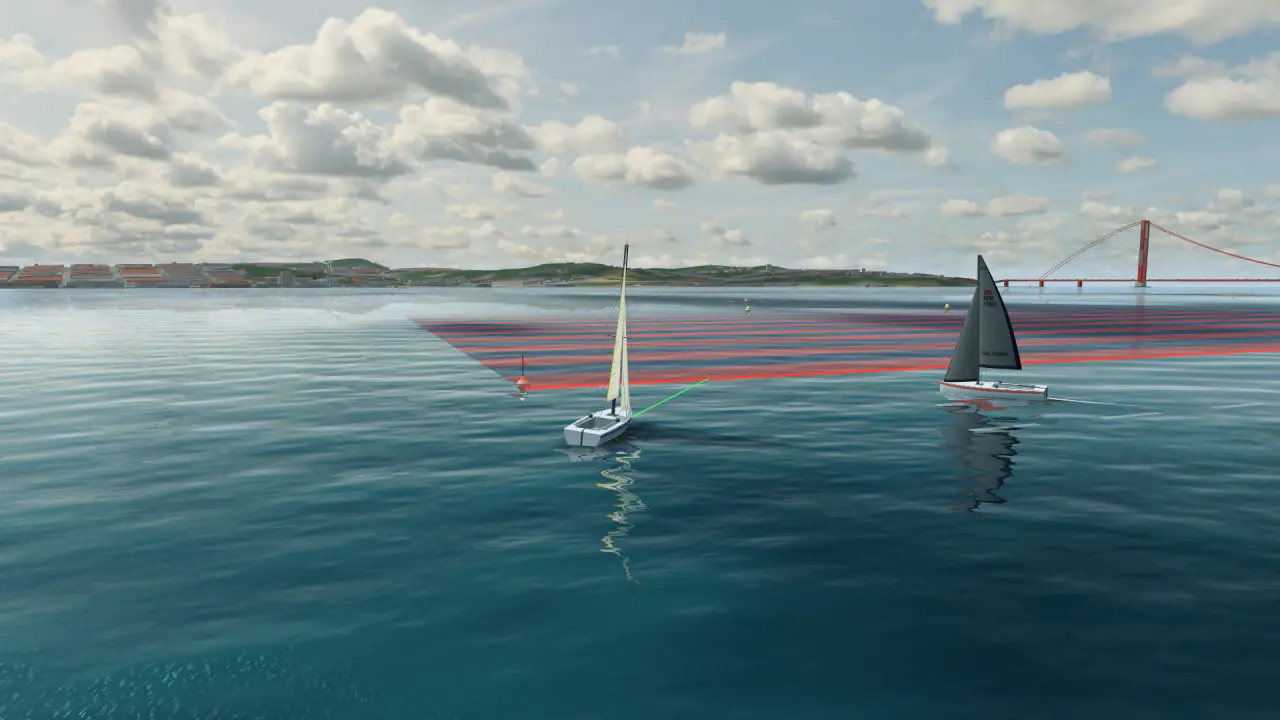
The start line joins two ends. The prestart side is the side from which you must start. Cross toward the course after the starting signal.
Check the course map first. A reaching start has a different line orientation from an upwind start. The first leg, not the camera, tells you which direction to cross.
Join distance, speed and time
A useful start combines correct timing, a clear lane and enough speed. Time to the line depends on your approach speed. Turning, easing and drifting can change that estimate.
The standard SailPolars sequence is 1 minute 15 seconds. The preparatory signal is at 1 minute. The gun is at zero. A host can select another sequence. Always read the actual countdown.
Recover from an early start
Under the game's individual recall, return until the whole hull is on the prestart side. Keep clear of boats sailing normally while you return. Then cross correctly toward the course.
Some events use a configured time penalty instead. Read the event settings before the start. Real events can use other starting rules and signals. Follow their sailing instructions.
Practise this idea
- Open the starting lesson or start trainer.
- Identify the prestart side and the first mark.
- Choose a lane with room to accelerate.
- Compare your time to the line with the countdown.
- Cross after the gun and review your timing and speed.
Avoid this mistake
Do not assume easing holds the boat in place. Even a slow boat drifts toward or away from the line.
Check your understanding
Can you start correctly with speed on three attempts? Repeat with another wind speed and a different sequence length.
Continue learning
This guide follows the SailPolars sailing school and guided practice lessons. Game controls describe the simulator. They do not replace practical instruction on a real boat.
Next: Race courses, laylines, marks and gatesAll practice lessons