
Sailing guide
Velocity made good: speed versus progress
Understand sailing VMG, true wind and apparent wind. Compare boat speed with useful upwind or downwind progress in the instruments lesson.
By the SailPolars team · Updated
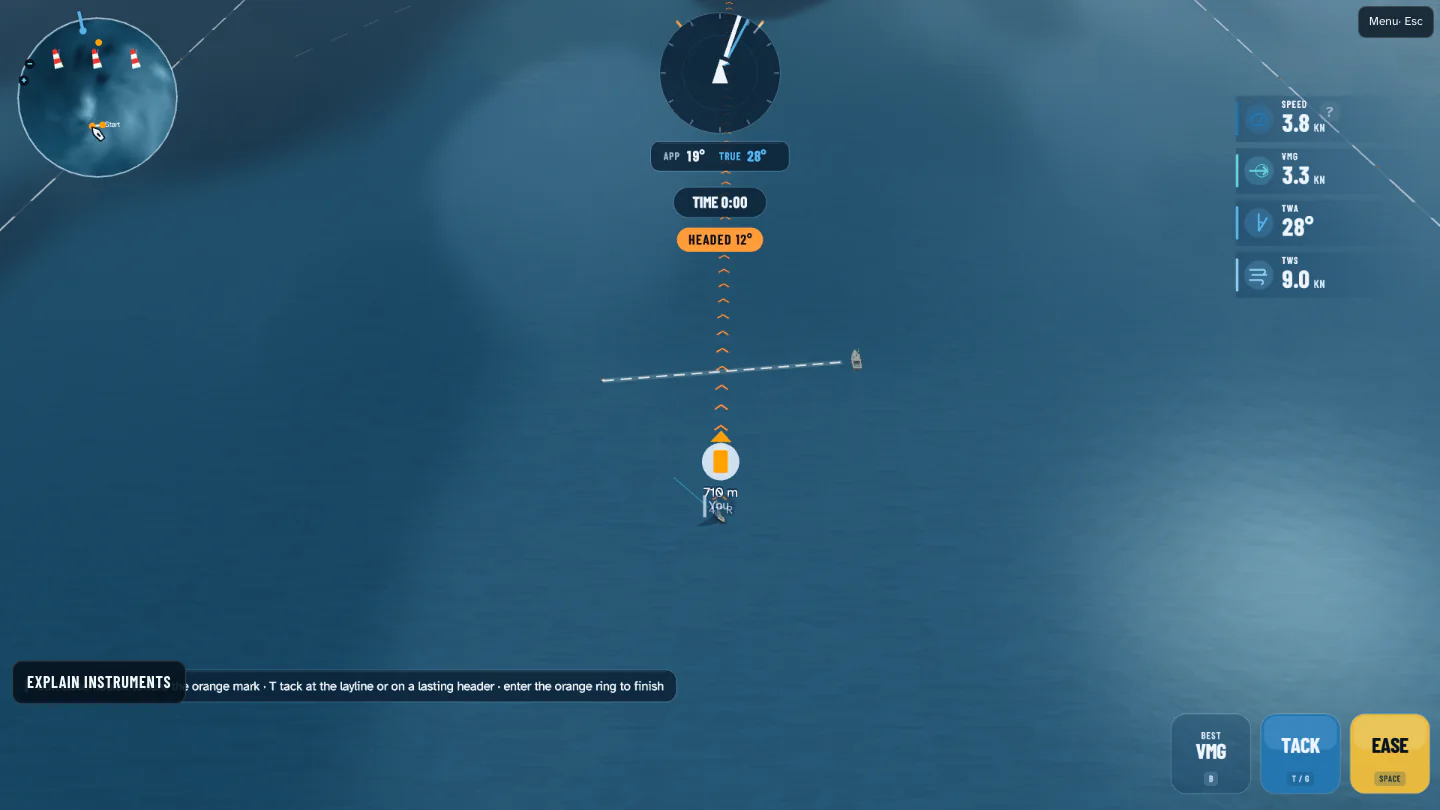
Read useful progress
Velocity made good, or VMG, is the part of your velocity along a chosen direction. SailPolars uses the wind axis for its sailing VMG display. Positive useful progress on a beat is toward the wind. On a run, compare progress away from it.
A boat can travel fast across the course and make little upwind progress. Another boat can travel more slowly and gain more distance toward the wind. Speed alone does not identify the better angle.
Compare speed and angle
In still water, a boat sailing at 5 knots and 45 degrees to the wind makes about 3.5 knots of upwind VMG. At 6 knots and 60 degrees, it makes 3 knots. The faster boat makes less upwind progress in this example.
Current changes the track over the ground. Leeway changes it too. Progress toward a mark is also different from progress along the wind axis when the mark is to one side.
Read the wind instruments
True wind describes the wind relative to the water reference used by the game. Apparent wind is the wind felt by a moving boat. Boat motion changes apparent wind angle and speed.
B activates Best VMG for the current beat or run. Steering returns control to you. Best VMG holds a useful angle. It does not plan the route, avoid traffic or round a mark.
Practise this idea
- Open the instruments lesson.
- Sail a steady upwind heading and observe SPEED and VMG.
- Head up slightly. Wait for speed to settle.
- Bear away slightly and compare useful progress.
- Press B, then take the helm before the target.
Avoid this mistake
Do not judge an angle during the first moment after a turn. Let speed recover before you compare it with another angle.
Check your understanding
Can you find an angle with more VMG but less boat speed? Repeat the comparison in another class.
Continue learning
This guide follows the SailPolars sailing school and guided practice lessons. Game controls describe the simulator. They do not replace practical instruction on a real boat.
Next: Wind shifts: lifts, headers and tack costAll practice lessons